Showing posts with label Cask Beer. Show all posts

Wednesday, 22 October 2025

Location, Location, Location

Last week, on a visit to London, we decided to walk over Tower Bridge to the Hand and Marigold in Bermonsdsey, and hence along Tooley Street to the Sun Wharf, a new Wetherspoons, in the former London Dungeon.  In October the tourist hordes have died down somewhat and our walk along Royal Mint St to the rear of the controversial sometime to be Chinese embassy, was an enjoyable one as we checked out yet another high-rise building being squeezed into the smallest of spaces.  On the bridge, gratifyingly, we didn't have to dodge photo taking visitors quite so much.  We noted a foreign, but unidentified warship, moored to HMS Belfast and the ever-changing skyline, before walking along Tower Bridge Rd and its nose to tail city bound traffic.

I have mentioned the Hand and Marigold favourably before and, on this Thursday, late afternoon, it was very quiet.  The friendly barman was line cleaning and mentioned he'd have rather a good porter on soon. Fine by me. In the meantime, a very decent pint of Lacon's Norfolk Gem was no hardship. I liked the taster I had of an Abbeydale beer a lot less and disagreed mildly with mine host about its distinct but denied whiff of vinegar, but all was redeemed by the aforementioned porter, Abyss from Other World Brewing, which hails from near Edinburgh it seems. This was an absolute belter of a beer. Highly recommended, as is the pub.

Moving on along Tooley Street, the Shipwright's Arms may be located in a bustling and increasingly refined area, but it still maintains more than a touch of its working-class roots. 

Inside, the atmosphere is lively, with a mix of commuters and local characters - geezers if you will - mingling around the large circular bar. The traditional woodwork and tiled shipbuilding murals add to the appeal of this classic pub. Outside, in that peculiar London way, we noted drinkers spilling out onto the streets, opting to stand and drink on the pavement rather than squeeze into the packed indoor seating.  The whole thing, inside and out, was going like a fair. It was good to see.

Of course, into each life a little rain must fall. There were three cask beers. Doom Bar and its stablemate Sea Fury along with Southwark Brewing's London Pale Ale which I had (in an abomination of a Sharp's branded glass) and found thin, weedy, and pretty flat. This was a shame, but this pub is better than its beer choice and was enjoyable despite it.

And so to our destination. Just past London Bridge Station which is in itself a railway wonder of the world and sharing its arches, is JDW's newest London pub - well probably - the Sun Wharf.  Inside this is a maze of separate areas which are served by one large and long bar. You could easily get lost inside, though, so packed it was. Exploring was rather difficult, and I'm pretty sure given there was more than one entrance, that I must have missed bits of it.  Service was good, though, and I noted that a couple of staff seemed to have been allocated solely to bring glasses back for washing and to clear and wipe tables. Given the throng inside, they were needed. I had an excellent pint of Buckingham Best, which of course had gone off when I returned for another.

There is little doubt that the Sun Wharf will succeed. It is in a prime position, has more passing trade than you could shake a stick at, and is reasonably priced. It is almost like a giant station bar. I'll still spend more time in the Hand and Marigold though.

Given the traffic, we walked back to Tandleman Towers South, thus missing out on the chance to use our bus passes. I still couldn't identify the unknown warship, given the darkness and the distance.

Unwisely, we called into the Goodman's Field as we passed. That was a bad idea, but overall, albeit by a majority, London cask passed muster.

I have had no end of trouble formatting photos in Blogger recently. It used to be easy, and now it just isn't if you want them to wrap. Apologies.

Friday, 11 July 2025

A Very Mixed Bag

While in Manchester the worst and more noisy aspects of bathroom replacement were taking place, we fled to London to get some peace and quiet and, importantly, to be able to have a shower.  The re-instating of our bathroom is still taking place, alas with no shower yet, but reassuringly, the connections are there, so it is a matter of time. In the meantime, I have had to resort to washing in the sink again. I say again, because my sister reminded me of our early days at our granny's in Castle Douglas, where that was the daily way of doing things until, once a week, we bathed in a zinc bath in the outhouse.  I must say, washing in such a way today is more vexatious than it seemed then.

It is a while since I have spent a week in London and of course, despite the reason and a determination to act as normally as possible, we did tend to treat it as a holiday.  And why not?   

Given that we had struck lucky with the weather, we determined to get out and about, but we started in the usual way with a pint or two in the Aldgate Tap, having previously had a quick pint in its sister, the Euston Tap. Now both sell cask beer, but also tend to have a good choice of German beer, so, given the temperature of around 30C, that's what we plumped for in both places. The choice was good with at least three beers in each and the standard Bitburger which actually, for a mass-produced beer, is both dry and bitter.

The next day, in a nod to our good intentions, we went shopping to Waitrose - it is nearest - and to be fair, we mainly ate in for a change.  Later that day, I had the pleasure of meeting, by arrangement, with fellow beer writer Laura Hadland. We met in a well thought of pub, the Old Fountain at Old Street which sells a range of cask beers, but my pint of Five Points Gold wasn't up to much and Laura's Oakham was very much end of cask.  Fortunately, as often is the case, the company and conversation more than made up for it.  Then it was a quick bus trip for me to another favourite, the Sutton Arms where the cask was just fine, though the choice didn't appeal, so I switched to Ayinger German lager when E arrived to join me. 

On Wednesday afternoon, we took a very hot number 15 bus to a new pub. Another Bloomsbury Leisure pub, this time on the Strand and a big bugger too, featuring Czech Budvar- and cask too, though I didn't try it. Stranded is aiming to sell beer the Czech way - in oversized glasses with a big head. The measures are two thirds, and it was fun to watch the attempts to pour correctly and then the services of a Czech beer and bar expert - who clipped the assorted staff behind the ear as she showed them how it was done.  Shame she poured the excess beer away, though Jon Dalton, the owner and an old acquaintance of mine, was kind enough to give us a couple on the house. We wish him well and certainly go there. The dark is particularly recommended and while Jon has high hopes that the Czech pours will take off, he remarked that it was a bit of a punt as the presentation is unfamiliar to most Brits.

Thursday saw us in Brighton, where I had not been before. Suffice to say, a very hot day, so no cask beer was supped, but I thoroughly recommend the Hole in the Wall - thanks Retired Martin - and of course the Evening Star. Though we didn't spend too much time in the pub given the glorious sunshine, we will certainly go again, and the railway station is a thing of beauty which entirely gobsmacked me.  More pubs to try for sure too.

On Friday, another new pub, the Hand and Marigold in Bermondsey.  Thanks for the tip, Will Hawkes.  This is a fab place with top-notch cask beer and is well worth a visit. It is air-conditioned too and the welcome was genuinely warm.   Then we bumped into an old BSF colleague, Caroline who will manage the Dutch and Belgian Bar at GBBF this year. She persuaded us to go to Dutch Taproom - It ain't much, if it ain't Dutch -  - where the beers were strong and pricey, but excellent. 

On Saturday we went out to Jack Duignan's new gaff, the King's Arms in Bethnall Green. No issues with beer quality there, and the Charrington IPA went down well. Another positive tick for London cask. We took the long route via the Peacock, another Will Hawkes recommendation. We were the only customers for a few minutes in this splendidly renovated pub in a housing estate. Very pubby, and the guy in charge was great as he explained he had very few beers on due to the cellar dispense equipment  suffering a losing encounter with an untethered gas bottle the previous night. I didn't fancy the cask choices of Five Points Pale and Landlord, but the Guinness on an 80/20 mixture was rather good as a substitute. We will be back.

Sunday, after watching Tweedy Pubs - I'm a big fan - we nipped across Tower Bridge to Bermondsey again, but alas, our target, the Victoria, while scheduled to be open was firmly closed with no way of telling why. A great pity this, as just look at it. A beauty. We hopped back to Borough High Street for another Will Hawkes recommendation, the Blue Maid, but beforehand stopping off at another old haunt, the King's Arms. Alas, my pint of Harvey's Best was north of 17C in temperature - bad old London showing up like Banquo's ghost at last. No excuse here as a fair bit of cask was somehow still being sold, and in winter, I have had pretty good pints here in what is a decent pub.  Get the cooling mended for goodness’ sake and stop doing this.

Our final pub was the Blue Maid. This is a fantastic looking place. Someone has spent serious money here and it shows. Two cask beers on offer, but I have decided that I actually dislike Five Points Best and didn't want a 3.4% Burning Sky offering. What a warm welcome too from the Ozzy barman - manager maybe - but talk about eye watering prices? 2.8% beers for north of £7.50? Me neither. But £5 a pint for cask? Well done, and the taste I had was fine, though I opted for London Black as my last pint of the trip.  E enjoyed a very expensive Ginger Beer and the pleasure it gave her was worth the price, so maybe they are on to something after all.

To sum up.   The new pubs were tremendous, the beer everywhere was expensive, so much so, that I was warned about £8 plus pints more than once. Having said that, in the main those who take cask beer seriously, price it to go - as is wise with any perishable product - and those that don't - just avoid the buggers, though it may cost you a few quid to compile your black list. They do cask beer and their customers no favours in selling it at 17C or higher degrees at top dollar. 

It was great to bump into my beer judging pal, Paul Davies at  Anspach and Hobday. He is a really nice person, and we had a good catch up. Having already met Caroline Debenham by accident, it just shows how small and connected the beer world is.

Finally, a big shout-out to Heritage Brewing of Burton on Trent. Both their Masseys and Charrington IPA were excellent. 


Friday, 9 February 2024

Let's Pay More for Cask?

Now we all know that the way to save cask beer from its inevitable demise is to charge more for it, don't we?  Well no. Of course not. Well, not in the general sense anyway, though of course there are exceptions.

A couple of weeks ago I read with a sense of disbelief that yet again this daft idea gets prominence in trade news, this time as it often is, in the good old Morning Advertiser. Georgina Young, Head Brewer at St Austell, in an opinion piece, tells us that a "dedication to quality would mean less chance of a poor pint". Well, that is surely obvious, but we all know that's not how it is, don't we?

Georgina doesn't expand her arguments much in the article - though that may well be due to editing - but let's rehash some of them. These are based on various open sources about premiumisation, adapted to the cask conditioned beer situation:

* premiumisation could be a strategy to enhance the perceived value of this traditional form of beer, potentially leading to increased sales 

*cask conditioned beer is typically associated with craftsmanship and authenticity. Highlighting the artisanal nature of the brewing process, the use of traditional recipes, and the dedication of skilled brewers can create a narrative that appeals to consumers seeking authentic and unique experiences
 
* using premium and locally sourced ingredients or speciality malts and unique hops, can set cask conditioned beer apart from mass-produced alternatives
 
* educating consumers about the distinctive characteristics of cask conditioned beer, such as the live yeast, natural carbonation, and serving methods, can enhance their appreciation and educating consumers about the unique aspects of cask beer can create a premium perception
 

The theoretical outcome, in this scenario, is that by employing these strategies, breweries can enhance the premium image of cask conditioned beer, attracting consumers who are willing to pay more for a unique and high-quality drinking experience.

On the other hand, there are decent arguments against: 

* if the cost of cask conditioned beer becomes significantly higher, it may alienate a portion of the consumer base that is price-sensitive. This could limit the accessibility of cask conditioned beer to a broader audience

* some enthusiasts and traditionalists will argue that the essence of cask conditioned beer lies in its historical roots and accessibility. The perception of exclusivity and high prices may be seen as contrary to the traditional values of cask ale, potentially leading to resistance from those who appreciate its historical and communal aspects

* the existing consumer base for cask conditioned beer often values its affordability and accessibility. If premiumisation strategies are not carefully managed, there is a risk of alienating loyal customers who appreciate cask ale as a traditional, everyday drink

* premiumisation relies on creating a perception of higher quality, but there is a risk that the perceived value may not align with the actual improvement in quality. If consumers do not perceive a significant enhancement in taste or brewing craftsmanship, they may feel that the premium pricing is unjustified

Now, you won't have to be that astute to guess that my sympathies, by and large, lie with the second set of bullets. It is perhaps the last of those, though, that really hits the nail on the head.  You have to get the quality right, and really there is a fat chance of that given that there is a wide and diverse range of outlets for cask beer, from the specialist supplier to the lone dusty handpump sporting a Doom Bar pumpclip. You have token cask beers, indifferent cellar keeping, differences between brewery outlets and those of pub companies and more. In the diverse pub market we have, you can't simply wish premiumisation upon it, bump up the price, and hope people will cough up.

Already in some specialist outlets that premium does apply, and it applies for the simple reason of trust. People will pay more for the certainty, especially if quality is poor elsewhere.  The other point that should not be forgotten, is that cask beer is a live product. Usually in premium situations, you price an object higher, but sell less at a greater margin. But pesky old cask doesn't lend itself to this arrangement. It goes off if you keep it hanging around.

So, is premiumisation dead in the water? Will cask continue to be the cheapest beer on the bar? It kind of depends doesn't it. In theory, quality always sells, but implying that premium pricing can apply to the whole market is misleading. Nobody really wants to spend top dollar on a gamble. Georgina agrees with this, but draws a different conclusion as to the solution. Baffling really as you have to achieve the quality. If you have the market, skills, quality and turnover, by all means bump the price up. In fact, why aren't you? Probably because you realise the beer has to shift. It is a kind of circular argument.

As I see it, logically, with minor variations, the old rule still applies. Cask beer has to be priced to go. That rules out premiumisation in very many cases.
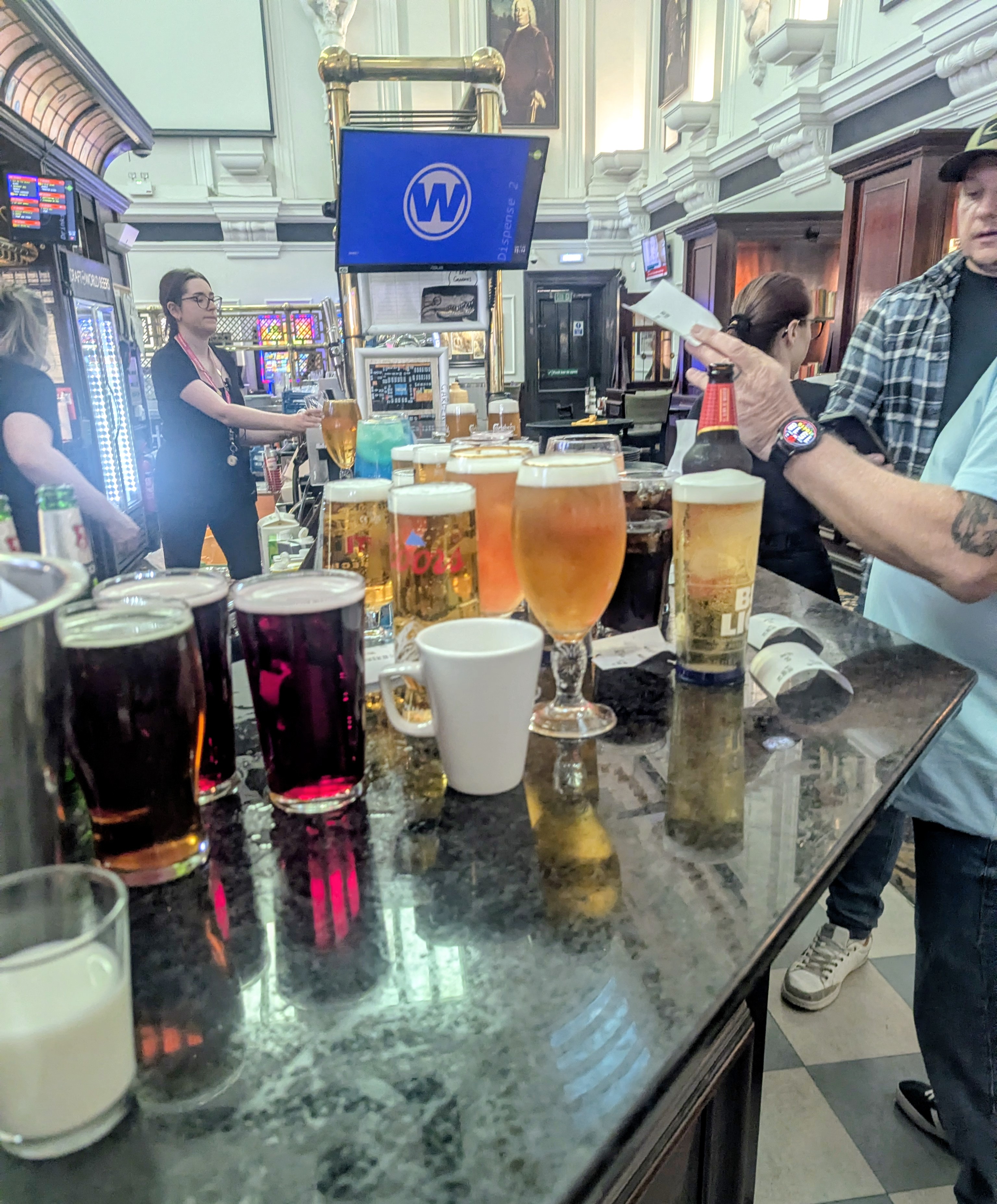
Of course, prices of cask beer vary. Competition, and quality, make for cheaper beer in the parts of the North still  dominated by cask. The market still decides.

London has bumped up all beer to an eye watering extent, such that even Wetherpoons are now offering £7 pints, albeit, not cask. Well over a fiver is very common and over six not rare.  Not sure that's premiumisation though.

Friday, 15 September 2023

Book Review - Cask by Des De Moor

The subject of cask conditioned beer is a complex and broad one and to tackle it, Des De Moor has written a comprehensive and extensive book about it. At 334 pages, it covers a wide array of beery topics, presented as a series of chapters with subject titles and a narrative about each. 

 Let's start with the introduction in which the author sets out his aims and objectives, which, broadly, are to describe the product and its history and to fill in gaps that may not be covered elsewhere. It's a big ask and a look at the bibliography and list of those spoken to or interviewed shows the seriousness with which the subject has been approached, and here is the first observation. This is rather serious book. Didn't all those interviewees have some good stories to relate as well as words of wisdom?

At the beginning of the book, the author, in his first paragraph, sets out why cask beer is "unique" and" unmatched by any other".   He concludes by quoting Mark Dorber, a cellarman of some repute, about what we'd lose if we lost cask beer, which is the joy of being in touch with something living.  These are both sets of wise words, and neatly and succinctly bookend the content between them, and are probably the most important sentences in the book.

In many of the following chapters there is an inevitable crossover to beer history and to the techniques of brewing and if you are not already familiar with the art of brewing, these will be of interest, as are the explanations of cask size, filling, returning and the many aspects that make cask beer different from keg or other beer.  The chapters on cellar keeping are meticulous in their accuracy and are recommended as pretty much definitive, though on the downside, may inadvertently give the reader the idea that cask is a much more complicated beast than it is, a possible problem if you are already inclined to think of cask as a difficult to deal with. Whatever your point of view, you will certainly learn a lot about cask beer from these chapters.

There are also strong chapters on what makes cask, cask, and cask beer styles, flavour and taste, though a tendency to over explain creeps in, for example by discussing at fair length beers that should never be presented in cask form.  (Though it is good to say that not all beer suits cask conditioning). 

Controversial subjects include unfined beer and acceptable levels of haze, but skate over the potential damage done to traditionally clear cask beer that gave rise to the doubtful response, often given to punters in the pub, "It's meant to be like that" even when that isn't so.  Rightly the effect of poor presentation is discussed and the difference between live beer and cask beer, which causes no end of difficulties within CAMRA and elsewhere is mentioned, as is the rise of craft beer and its inevitable effect on cask.  The chapters on food and cask beer outside the UK are probably unnecessary, and much of the history could do with a sharper edit. In fact, this is a theme throughout, as the book itself is probably overall a bit too long.

Moving on to recent history and the future of cask, while merger mania is discussed and the Beer Orders mentioned, there is little reference to just how far the cask beer revival had come in the late 1970s and 1980s where throughout the country, both regional brewers such as Greenall Whitley, Shipstones, Morland and many national brewers, particularly Allied (who set up separate cask chains such as Walkers on Merseyside and Holt Plant and Deakin in the Black Country) were pumping out vast quantities of cask beer. Others large brewers like Courage also produced cask in volume. With Independent Family Brewers still flying the cask flag, as they do now, the rise of lager apart, this was peak cask and more could be made of it in the book. 

Then cask beer was mainstream and most that drank it just thought of it, if they thought of it at all, as beer. Not cask beer, not traditional beer, but just beer. And peak cask continued until the Beer Orders separated pubs from brewing, with dire consequences for both cask and the beer industry; a separation which still casts a long shadow today. The author recognises this as the law of unintended consequences, but he could have expanded, to good effect, the devastating effect on cask beer production and subsequently on beer quality, the cost of a pint and much more. 

As I mentioned before, we get little by way of a look at cask beer from the consumer point of view. Where are the uplifting stories from pubs, brewers and importantly drinkers? While craft in its current form may be the younger drinkers' discussion topic of choice under railway arches, cask has always been the social lubricant of the traditional pub goer, to whom the beer is important as an accompaniment to fun, rather than the fun itself - particularly when you could simply ask for bitter, and depend on your local pub or brewery to supply you with a decent pint. What happened to these famous cask beers such as Bass, Ind Coope Burton Ale, Tetley Bitter, Boddingtons and more, that you could depend on?  We could have been told, and a few anecdotes and a bit of background would have lightened and balanced the book.

Referring to the future, there is the unanswered question that if cask is in dire trouble as production figures suggest, why does it thrive in, for example, the likes of Sheffield, Manchester, Liverpool, Derby, Nottingham - and even rural Lancashire and Yorkshire? Can we not learn lessons from them? The question is mentioned, but not explored, though one solution mooted strongly is that the answer to cask's woes is to charge more for the product. This unconvincingly overlooks the fact that brewers are the last to see much of any price increase, and that cask succeeds in the places mentioned, as do the many small brewers that supply it. Perhaps the cost of cask beer, however it is priced, is both a strength and a weakness? A dichotomy that will never be resolved?

These points, however, don't detract from this comprehensive book. It is a very valuable contribution to any beery type's library, and useful for those that want (nearly) everything they need to know about British cask beer in one place. What is perhaps missing though is the affection, romance, intensity and the human interactions that many would say is the hallmark of cask beer, but as a more serious look at the subject, it succeeds in bringing together, the technical aspects over the more ephemeral and nostalgic. 

Reviewer's note. This isn't an entirely neutral review. Where cask is concerned, I have skin in the game. After all, I have been supping it for nearly 45 years and stopped many a firkin going sour over my time.  Whatever happens to cask beer, it will see me out, thankfully!

Disclosure: My review copy of the book was supplied by CAMRA Books, from whom this excellent book can be purchased. (CAMRA Members discount is offered too.)


Friday, 2 June 2023

Fresh Ale? Neither Nowt nor Summat.

Every so often something comes along claiming that it will solve a particular problem. They come in many forms - superfoods which will give you a wet nose and a glossy coat if you eat enough of the right stuff - knee supports that fool the gullible into thinking that buying them will solve your bone on bone knee problems and obviate the need for surgery - that one got me - they don't - and so on and so forth. The simple fact is that when someone comes up with such things is that they rarely pass the smell test, so let's have a look at one that has recently come up in the beer industry.


"Fresh ale" is the latest thing, it seems.  What's that, you may well ask?  You may reasonably be thinking, "that'll be beer that is served before it gets too old" -  and why wouldn't you?  After all, they do this in some brew pubs where the beer is sold straight from conditioning tanks, so that'll be fresh, won't it?  Or what about cask beer - live beer served from a cask  - that has only a short shelf life. No, that's not it either, it seems. What about the initiative, launched only as recently as September by the Campaign for Real Ale (CAMRA) and the Society of Independent Brewers (SIBA) called Drink Fresh Beer?  This is "A campaign that recognises cask beer is in “steep, sustained decline” and is struggling to shake its “male, pale and stale” image will be launched at the Future of Cask Seminar on Thursday 22 September". That must be it then, surely? Well no. Guess again. It isn't that, either.

So what is it? It is a new keg beer, that's what. And you'll not be at all surprised to find out that it is "different and exciting."  What could it be, I hear you ask? Well, Drinks Business has the lowdown. It's a keg beer with lower carbonation, developed by Otter Brewery. It is explained thus:

"When we put it into a keg we actually low-carbonate it, so it has a much gentler and softer carbonation which is designed to emulate the carbonation of cask ale as far as taste goes in terms of mouthfeel. The second major difference is that when it is served, it doesn’t run through chillers in the cellar. Instead, it runs through the python or whatever assets the pub has to allow the dispense temperature to be around between 8.5 – 10℃. So, it is slightly cooler than cask ale, but it is not as cold as keg, and it is slightly fizzier than cask ale, but it’s not as harshly carbonated as keg".

Now at this point, rather than quote more chunks of the Drinks Business article, I urge you to read it for yourself, though I will offer comment on one more paragraph, and it is this: "CAMRA should be for it, not against it, he insisted.(The guy from Otter Brewery)  After all, “CAMRA now promotes ‘World beers’ which are in keg. If they are doing that, why wouldn’t they look at something brewed in the UK that is in keg and talk about it just as favourably?”

Now, of course, even a cursory read through this will have most readers thinking that there is nothing new here at all. This is just another keg beer positioned to fill and bridge the so-called gap between younger and older drinkers, lager and ale drinkers and traditionalist and modernisers.  We have been here before, and they have failed before. In Lancashire parlance, they are neither nowt nor summat, and will almost certainly be seen as such by the drinking public.

There is however another point.  It can and in this instance, clearly is, the case that in bending over backwards to "modernise" in an attempt to bring in younger drinkers to the cause, CAMRA is giving the impression to many, that real ale - cask conditioned beer - is just part of its mix rather than its reason to be. That is a dangerous position to be in. 

When the champion of cask conditioned beer appears to the trade and trade press to have a negotiable position on the subject, alarm bells should be ringing at CAMRA HQ.

The already weak case for this "breakthrough" is undermined by admitting the longer shelf life of this non-live product is a key feature. Otter also assures us that this is not a fad product. Let me know in the comments. 

Let's hope that if fresh beer is as relevant as it should be, that CAMRA and SIBA put some more welly into their original initiative. Cask beer may be suffering, but it doesn't yet need replacing with keg.


Friday, 21 October 2022

How Much for a Pint of Cask?


We are, it seems, back with the same stuck old record that some trade observers think is still a whizz idea, even though, all things considered, it most likely isn't. Yes, Folks, to solve the problem - more of which in a moment - of how to sell more cask beer - aka real ale.  You know, that stuff - dispensed from a handpump - that is often served badly, being variously too warm, too flat, too vinegary-  and just plain not as the brewer intended. That stuff that experienced advocates of the style rarely purchase in an area or pub they don't know well, for fear of disappointing quality. That's the one. And their solution to declining volumes and poorly presented pints? Charge more for the real ale lottery, but keep the likelihood of winning a prize just the same.

We are told by advocates of this theory, the hoary old myth, that it is so difficult to keep cask beer that it needs the skill of the landlord to be recognised by charging more for it. We are also asked to think that there is little point in selling the stuff when you can make more from other products on the bar - a somewhat unsophisticated argument given the variables involved.  Selling in scale - although specialisms exist - is generally a diverse business, and those selling "things" generally take the view that you can't make the same profit margin on everything you sell, but need to have as broad an offer as possible to attract the widest customer base you can.

In cask beer, the elephant in the room, which is actually as big as the room itself, is that if you cannot guarantee the quality of the product, then you cannot charge more for it.  If you can and your customers will stand for it in these straightened times - then maybe you can up the price a bit, but be aware that even the best have to be careful not to overprice such a short-lived product. Every pint lost, will eat into your profit, so it has to be a careful balancing act.

Beer is such a broad church, and cask beer is one of the most diverse parts of it.  All beer relies on turnover, but cask much more so, as it is fresh and very perishable.  At its best you will get 3 days out of it, so those in the know don't overprice cask beer, as the chances are you won't be able to sell it in good condition.  Cask beer has to be priced to go. Even if you have a more affluent clientèle, paying more than average, you can't overprice it for the reasons stated. That results in poor quality and declining demand as trust goes.

It is odd, too, that while cask volumes may be down, there is still plenty of cask beer in top form available. Specialist pubs, the tied houses of Family Brewers and many more, all supply reliable quality cask beer, often at remarkably competitive prices. In areas that have such competition, you will often find the non-mainstream sellers of cask, have better quality too. They have to compete. There isn't one size fits all where cask is concerned.

This does not even take into account some of the other variables, such as the current cost of living crisis.  Can we really believe those who would tell you that cask ale drinkers will pay more for cask beer as an occasional treat, in the full knowledge if the beer is only occasionally drunk, then it will likely not be a treat at all?  

A final point. Cask ale still costs, on average, less to produce than keg, which relies much more than cask on expensive CO2 in both production and dispense.  The margins aren't likely to be decisive if you turn beer over quickly. Not exactly "Pile it high and sell it cheap", but certainly it needs to shift much more quickly than other draught stock.

Of course, everyone from brewer to publican deserves a decent return on investment, but forget this at your peril. Cask, as a fresh and perishable product, must be priced to go.

I commend to you also recent posts by Pub Curmudgeon on this subject.  He has gone into the figures much more deeply than this dashed off piece allows.

And let's stop this idea that cask is hard to keep. It isn't, as I (and Greene King) point out here, but it does need a little (easy to learn) knowledge.  There isn't in most cases any reasonable reason to sell poor cask beer, but a bit of pride in what you sell wouldn't harm either.

.

Friday, 15 July 2022

Banging on for Years


The Dear Old Morning Advertiser published an article today about one of my favourite subjects.  Keeping cask beer.  It referred to Greene King joining in a campaign to re-instate cask beer to its rightful place as a unique product.  The article was part of a MA initiative called the Cask Project,  "a bid to re-energise the category and reinstall it in pride of place on the bar of pubs throughout the country."

The MA goes on to say that "Cask beer is in long-time decline and, having joined forces with some of the UK’s leading cask beer suppliers – Carlsberg Marston’s Brewing Company, Greene King, Sharp’s Brewery and St Austell – we want to reinvigorate attitudes within the trade to a product which should be rightly cherished by operators." All well and good, I'd say, though they seem to be aiming this campaign at younger drinkers, who are on the whole distrustful of the product, no doubt through bitter experience of getting a bad pint and being put off for life. The points made and the laudable aims however really do apply to all us cask beer drinkers, whether callow youth or grey haired old devotees.

Now, getting further into this project of good intentions, I was very disappointed to read a rather scant set of tips to keep cask better in the pub. This, by St Austell's Trade Quality Manager, has either suffered from an over vicious edit, or is just not sharp and detailed enough to be of real use. Moving on, I won't go into too much negative comment about premiumisation, except to say that cask beer to be at its best, no matter how good the cellar  keeping is, depends almost wholly on turnover. Assuming the beer is presented as it should be,  that is the key to cask success, and it can rarely be achieved by charging top dollar for a product often served at less than its best.

One thing from Greene King's new head of brewery customer engagement, John Malone in today's piece that I thoroughly agree with though, is the statement from Greene King that "Younger drinkers aren’t choosing cask and if we can’t guarantee there’s a 99.9% chance of getting a perfect pint every time then we’re not doing ourselves any favours."  With the proviso that it applies to all of us drinkers, well said. Happily, I can report that the rest of his article which can be read here is brimming with good stuff.  I was particularly struck by the fact that new Greene King licensees are all given a comprehensive cellar management course - I wonder if the existing one are -  and the general good sense contained in the article. Logically, you now know that if you get a duff pint in a GK pub, you can refer the case John Malone. 

Finally, in this unusual peon of praise to Greene King, can I commend to you one final thing. John says; "I think there’s a perception that cask is a really difficult product to keep, but that isn’t the case. There can be a few key things that can lead to less-than-perfect quality pints being served over the bar, but if you get the basics right, it really isn’t that hard at all."

Exactly what I have been saying for years. Just have a look through blogs passim for evidence of that.

I really hope that GK and the others supporting this initiative carry on with what they are doing.  Such a campaign needs ongoing support.

I recommend to you also this fab video by Black Sheep Brewery and Maisie Adams. If you haven't seen it, be sure to do so. If you have, be sure to tell others about it.

Thursday, 17 February 2022

London. Back in the Cask Game?

Those that know me will be aware that in my trips to London, I rarely drink cask unless I'm absolutely sure of the venue's bona fides. This has come of long experience, where, particularly in the warmer months, it just isn't worth the risk.  Even in winter where cellars are naturally colder, over venting of casks, old tired beer, lack of cooling and the like is such a dispiriting problem that I generally just don't bother.

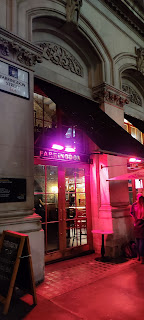
We hadn't been back in Tandleman Towers South since November and were well overdue a visit, so we went last week and after the tedious task of checking the many rooms (3) for issues (0) we decided for a change to head to Farringdon for a couple of pints.  Our destination was the Farringdon Tap, a place that has been open for a while, but which we hadn't yet been to.  I'd already mentioned on social media that we'd be coming, but it was particularly rewarding that the Boss Man of the owners, Bloomsbury Leisure, had taken the time to meet us and have a chat. I've met Jon before in Manchester in the company of his mate, the legend that is Stonch, so despite me not immediately recognising him, we were off to a flying start.  

The pub was pretty well bustling, which was good to see, and offered a decent number of beers from a steel wall behind the bar. On this occasion, the only cask was Thornbridge Lord Marples and knowing that all Jon's pubs keep their cask well, I had no hesitation in ordering it. It was in excellent condition and as we chatted the need for another became apparent. A great start. One or two things emerged from our chat. First we talked about the new Victoria Tap at Manchester Victoria Station, which should be open in April. This looks to be a splendid venue, with a decent outdoor space, so will be a great addition to the area. The other piece of info is that Jon will be opening another pub near Tandleman Towers South. If you know the area where I rest my ancient bones while in London, you should easily guess how it will be named. Jon then got the call to get himself home from his better half, and as we were keen to be off on another tip, it was well-timed, but it had been very pleasant.

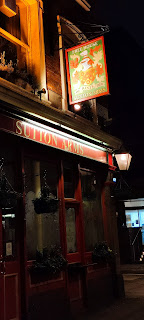
Our next port of call was the Sutton Arms in Great Sutton St, and despite going the long way round - thanks Google Maps - this proved another worthwhile visit. On a Tuesday night, this was absolutely rammed and had a great atmosphere. It was the sort of place you warm to immediately. I had no hesitation in ordering  Five Points Pale and this was in fine nick too.  The barman was very welcoming, but even better, the landlord himself, ushered us to two stools at the end of the bar which had a reserved sign in front of them. "Sit here." he said with a wink. "This is my perch, but you have it".  Fab.  We had a great chat with him - an old school type who I took to right away. His son ran the bar, and amazingly, recognised me and gave me a couple of tasters while we chatted about beer.  Of course, we had another and will be back. A great pub.

On Wednesday, we met an old pal from our neck of the woods for dinner. Beforehand, we warmed up in the Woodin Shades, a Nicolsons pub opposite Liverpool Street Station. Guinness for the pal, Pilsner Urquell for E and for the by now emboldened Tandleman, London Pride, which again was in great condition and enjoyable. 

Thursday saw a little culture with a visit to the Imperial War Museum, with the inevitable trip to sample Harveys in the  deserted Royal Oak.  Just one pint as we were meeting BSF colleagues for a quick one in Fuller's Parcel Yard. They were returning to Yorkshire after a week down South. Again rammed and disappointingly, only London Pride was available - even more so when the lads mentioned it was exactly the same the previous Sunday when they had lunch with John Keeling. Surely they can do better than this? Nonetheless, the Pride was good, and they did put ESB on in time for my second and final pint. 

That wasn't quite it for this visit. On the recommendation of the BSF lot, we nipped over to the King Charles 1, where there wasn't even elbow room. Forcing my way to the bar, I ordered the first cask beer I saw. No idea what it was, but you know, it was great too.

What conclusions do I draw? Well, cask beer seems to be making a post Covid renaissance in London, with the possibility that the reduction in the number of beers offered has resulted in better quality. Pubs were very busy too, so the after work London thing is making a comeback.  All in all, encouraging. 

Our post meal drinks after our meal with our pal - Guinness for him of course - were Litovel Pils from the Czech Republic. No cask in this handy pub (Barley Mow, Curtain St), but it was very enjoyable all the same.  I also had a pint of mediocre cask (Dark Star) in the Oliver Conquest near our flat, but really you should drink gin there. 

And cyclists! At night they have such dazzling lights that  make seeing what's behind each difficult. E was nearly wiped out, as her vision when it is dark, isn't tip-top. Just watching  them in traffic, generally,  is a shitshow of dangerous speedy cycling

Tuesday, 14 December 2021

Plenty Kisses and No Frogs

A few short weeks ago, my local CAMRA Branch had one of our days out by coach. This time - and we have been there before - Skipton in North Yorkshire - was the venue. No great distance from us, probably 45 or so miles depending on where you measure it from, and a busy market town with lots of pubs beckoned. What would it be like? Now, the way we operate, we aim to get to whatever venue it is by around 12 noon. On this chilly but bright Saturday, we were dropped off at the coach park bang in the centre, more or less on the dot of twelve.

On these events, our social secretary usually prepares a list of pubs to visit. These are recommendations, not a route to be followed, as naturally we are all free to wander where we choose, as long as we are back at the announced departure time. The bus does not wait around.  This time our list was around ten pubs and micropubs, and as soon as we were let loose, off we went, dragging our thirsts behind us. Of course, we don't visit pubs mob handed, people deciding with their cronies where and when they'll go first, if at all, but inevitably groups bump into each other and exchange information. That's always handy, and it is great to meet our lot along the way.

Skipton is a great mix of pub types and micropubs, café bars and micropubs, quite a few of which didn't exist on our last visit around four years ago, but my little group started at a couple of old canalside favourites.  These weren't lacking at all on the cask ale front. Another thing is that the town is compact and while there are pubs further out, such was the quality, ambience and friendliness, particularly of the micropubs, that we found ourselves enjoying the places so much, that sometimes a couple of beers were decided upon, so good was the place and company. In fact, we got nowhere near our list of ten before the witching hour of bus departure, but did in fact, on recommendation from fellow topers, venture off-piste with great success. It was a happy bunch of CAMRA members that departed back to Lancashire, although we left with great reluctance.

So, what does this all tell you? Firstly, when cask beer standards are so high - and I didn't hear of anyone getting a duff pint - as a pub or bar, you simply have to raise your standards, or you will be left behind.  Where standards are high, you can shift a lot more beer, which in turn means you can offer greater choice without diminishing quality. This is the virtuous circle that cask beer needs to thrive.

How does this apply elsewhere?  While nothing is certain, it all starts with having exemplary standards in serving cask beer. Do that, and you should get the custom needed to maintain it. Then, hopefully, others will follow. Cask beer dead? Not a bit of it. Just do it well and see how that helps it thrive and survive.

 This is happening in practice in my CAMRA branch area. Rochdale has an increasingly great cask offer - and it has been pretty good for years. There the pubs get together to offer weekly discounts, annual ale trails and more. Bury is up and coming and the Oldham real ale revival is well under way. 

Another point to make was the great welcomes we all had. Locals keen to chat, friendly bar staff and great beer. Dour Yorkshire folks? Not a bit of it. As always, get the offer right, and you are much more likely to succeed.  Get it wrong and you certainly won't.

I haven't mentioned craft beer. When cask is this good, why would you?

Thursday, 2 December 2021

Looking for Frogs to Kiss

 Our trip to Helensburgh started well. The journey was pleasant, even allowing for the fact that at Gretna Services, nobody could supply coffee due to water pressure problems. Not that Costa, Burger King or KFC bothered telling anyone. They just let you queue, no doubt in the hope you'd buy something else. One shop though had one of these self serve machines, which did the job. But th'Alfa was in fine form, and we arrived in decent time at our digs.

First time we've used Airbnb, but this was a new architect designed build in a decent location, and it turned out to be just fine. Triple glazed against the Clyde's icy blasts and very well heated and modern, we were snug as bugs in rugs. We unpacked, checked it all out and decided a pint was in order.  We weren't eating until seven, and it was just before five, so why not?  Only one place to go, the Ashton, which was a former local CAMRA Pub of the Year, and which I used to have the odd pint in nearly 50 years ago. Mind you, I have been back plenty of times since.

Three cask beers on offer in this Belhaven outlet. Fyne Ales Jarl, Taylor's Landlord and something else which I have forgotten. Possibly even from Scotland? Not taking notes can be a disadvantage - but I don't look like a dork at least. We had to sign in and wear masks, this being Wee Nic's bailiwick, and we soon got used to it again. The beer was good, I was inadvertently short-changed, which gave rise to a bit of banter when I mentioned it. "She's been doin' it for years Son" and the like. A great start and the subsequent meal was fab, so all was well so far.

Next day after a wander round, we tried a pint in the JDW Henry Bell.  I wasn't confident, but after a couple of duff tasters, I had a pint of The Headstock, a somewhat sweet and insipid pale ale from Redcastle Brewery in Carmyle, which is in the East End of Glasgow. Carmyllie which is apparently in Tayside. I suspect that it might have been just about better -though likely not by  much - if it was turning over. By the time I struggled through it, my pal arrived and she, being a gin monster, it would have been rude not to join her in her preferred potion. E was a willing accomplice and after a swift one - or was it two? - we went to our booked table at La Jupe where a couple of pints of keg Jarl before too much wine, was the order of the day. No cask there.

A freezing cold Scotrail Class 334 took us to Oban the next day. The chillness of the train was somewhat abated by the views and good weather.  But so cold had I become, that our first stop was Mountain Warehouse for an additional layer.  Wisely E had more layers than Scott of the Antarctic.  No real ale at our fishy restaurant lunch stop, or at Aulays Bar, where my first pint of Tennents was from a pub that was a finalist in the best pint of Tennents in Scotland. There at least, was a fine traditional Scottish bar and the beer wasn't too bad either, in a tallest dwarf sort of way.  Seeking that elusive frog to kiss, after we had been shopping, we tried the Oban Inn. No real ale there and hence to the Lorne Bar, where a lonely handpump looked as though it hadn't pulled a pint since the summer. At least. A friendly welcome though, and a nice complete island bar with peculiar colour changing lights was enjoyable.  A sort of subdued Highland disco perhaps? Tennents again for us.

Our last port of call was next to the station. The very impressive Corryvwrekan, a JDW house had plenty of real ale at least. Frog snog it was. I rejected the Orkney Dark Island after a taste and settled on their Northern Light Blonde Ale, which was neither refreshing nor citrusy, as promised on the clip but was - well - knackered - and a complete diacetyl bomb to boot.  Back in a wet Helensburgh after another cold journey we nipped into the Ashton, where again, Jarl restored my faith as we watched Rangers win and some local drunks being pretty obnoxious.

Not much to drink at all the next day as it was curry night with my teetotal sister and brother-in-law.  We did manage a walk to the Belhaven operated Ardencaple Hotel, which we reached after a freezing walk in a howling gale, but a nice chat to locals and decent lager from West sufficed. I did note two handpumps, which while certainly not defunct, were not offering cask at that time.

Saturday took us to Glasgow and the Old Tenement House for a bit of culture. Fab place and well worth a visit and handy for the State Bar, a real ale bastion, where cask drinking is not a strange thing to be doing. Not too busy at one in the afternoon, but it was more than gratifying to see the pumps being used at a rate of knots. Stewart Brewing Citra Blonde was two pints good and if we hadn't been meeting our pal again, would have required more. I paid in cash and I doubt if it was giveaway. It isn't price, folks - it is turnover.

And so a final trip to JDW where I gave up on cask for the week. Redcastle again and I disliked the taste of both the IPA and the Red Ale. Bottles of Brookyn Lager - which was surprisingly good - is it still imported? - filled the gap until our evening meal at the fab and packed Sugar Boat.

Normally speaking, real ale drinking can be a bit of a kissing frogs exercise. Especially in strange territory, it takes a long time to find your prince/princess. Here you had to find your frog first and in what is effectively a real ale desert, this is even more difficult than usual. Turnover is very difficult where you are in a drinking environment where, if you don't sell Tennents Lager, just don't bother opening.

So what do I conclude? This neck of the woods isn't really cask territory at the best of times, so buyer beware.  Be very suspicious of a lone wicket and try before you buy.  Recommended Good Beer Guide places are usually a reasonable bet, but even there, turnover can be a problem and as I always say, cask needs turnover above all. 

Sad to see that Belhaven signage is being relegated to second place by its Greene King owners wherever you go. Greene King is being pushed instead on almost everything printed. If it wasn't for Belhaven Best, there would be nothing at all, really.

It was also clear that the English influence in real ale turnover within Helensburgh was diminished by a lack of winter tourists, and there wasn't too big a Royal Navy presence on our visit. They mop up a fair bit, though there were four English lads getting stuck into the TT Landlord in the Ashton.

In my next blog I'll tell you about somewhere where cask is King and the difference that makes.


Monday, 22 November 2021

Two Bad Ideas

 There's a lot of doom and gloom about cask around these days. "It's all being cut back as nobody is drinking it" type of thing and amid that a suspicion - told me by a very reliable source that "fings aint what they used to be" in a rather unexpected way. My source tells me that some cask beer from some larger independent brewers is actually brewery conditioned, such is the fizz and clarity of the beer, combined with the complete absence of sediment.  There is a suspicion that some who have switched to bottling and canning, now that the pubs have re-opened, and cask demand has returned, to meet this demand, beer held in tank and set aside for canning but no longer needed for such, is put into cask without that bothersome business of cask conditioning it. Now this is all too possible, but hopefully if so, was only to use up stocks. If you know any more about this, do let me know. This is not a clever thing to do at all, for many reasons.

In these all too troubling times, another thing you get from those who should know a lot better, is that cask beer should be saved by premiumising it.  Yes Folks, a perishable product, often kept badly and served in appalling condition, should cost more to save it. Such logic would make a cat laugh.  For the umpteenth time, what you need to do with cask beer is keep it well and turn lots of it over. This increases quality and confidence, which then means more sales. A virtuous circle. Maybe when everyone does that, then we can talk about price. Until this happens, then charging more to make it better, just isn't on. 

And while I'm about it, it isn't more difficult to keep cask beer than any other beer. You just need to know what you are doing, and that can be learned very quickly indeed. Time we stopped pretending on that one too.

I know big brewers have been sending out re-seeded more or less brewery conditioned beer for years, but at least they do ensure a live yeast count.

In my next post, I'll talk about a real ale nirvana.

Friday, 20 September 2019

Cask Alive and Kicking in Manchester


Yesterday was a lovely early Autmun day in Manchester and brought with it a day out with my oldest friend - well not oldest - but since day one of starting work in Liverpool almost 40 years ago, oldest in terms of length of friendship. A long time that. Boy have we supped some beer together in that time, but I digress.

First beer up, to decide over a pint where to go, was Holts in the unbeatable atmosphere of the Hare and Hounds on Shudehill.  Busy as always, Holt's Bitter in perfect condition and a mere £2.50 a pint. Don't worry, no more prices, as this writer as always took no notes and can't remember much by way of detail. I only know it was a fiver for two pints, as we fought to get the first cheap round in.  The raucous atmosphere here is infectious and despite having our ears assaulted, a rough plan emerged.

Next up - Mackie Mayor. This conversion of an old Market hall into a cornucopia of eating and drinking never fails to impress.  My Squawk Bitter was even more bitter than the Holts and in great nick too.  Mike liked his - whatever it was - so all was well.  Just the one there and off to the Crown and Kettle.  I plumped for Thornbridge Tropical Swan Nectarine; 3.5%, clear as a bell and utterly delicious, with notes of orangey citrus.  One wasn't enough, so I had two, with Mike expressing satisfaction with his Hawkshead Pale. It was tempting to have another, but the next stop was a new one for Mike.

Cask is in a newish development in a canal basin in Ancoats and offers a great range of cask and keg beers. Expertly managed by Warren Mccoubrey, an old acquaintance of mine and former brewer with Marble Beers no less, he knows his stuff. Warren was there and said hello, but my pint of Pictish, though clear, had that bottom of the barrel taste. No problem. It was exchanged and Warren came over later to say he'd checked the cask and it was more or less entirely drained. Vindicated. Squawk Crex (I think) was our beer of choice. This time, pale and much more balanced than the bitter, but with tropical notes was the perfect foil to the warm Autumn sunshine.  We basked in this for far too long as we chatted and put the world to rights over too many pints.

 So Cask Ale Week was celebrated inadvertently, but in the best possible way. Drinking cask in good Manchester pubs isn't  a lottery at all, but a reminder - hardly needed for us two - that served well it is unbeatable. And, as I keep saying, is not at all difficult to do.  Despite the warm day, all our pints were at a perfect temperature, weren't over vented or flabby, but conditioned to perfection.

This wasn't intended to be a blog post so no photos were taken. I've just put the beer of the day in instead, though honestly, it could have been any of them, all were so good.

We did have one more beer on the way back to Victoria, but while it was good, we didn't really need it and shouldn't have had it. It wasn't my idea, but by then judgement was somewhat impaired.


Cask Ale week runs from 19 - 29 September 2019

Wednesday, 16 January 2019

Good News - Cask Saved


Yesterday there was a Twitter post that caught my attention. It referred to an opinion piece in Imbibe Magazine by Jessica Mason in which she claims that "We’re on the precipice of a cask revival". The article goes on to explain her thinking which can be summed up - more or less - that cask can revived - wait for it - by modern brewers adopting Golden Ales.Well I exaggerate, but I hardly agree either with the way the article says "cask is becoming ever more exciting, flavoursome and stylistically broad" as if we've all been drinking flavourless crud for all these years and can only be saved by innovative craft brewers rescuing us from our own stupidity. Try telling that to Phoenix of Heywood for example who have been brewing a West Coast IPA before many of the innovators were out of nappies, or the nearly 40 beers beginning with word "Gold" or "Golden" in the 1998 Good Beer Guide - and that's not counting the dozens more that have "gold" somewhere in the name. In that same edition there are herbal beers, spiced beers, lemon beers, cherry beers, ginger beers. Beers made with liquorice and chillies. I could go on. It isn't new folks. It has all been done before.

So we need modern craft brewers to show us the way and revive cask? These are the same people that give you cask beer that looks like chicken soup and undermine the work done by brewers for many years to ensure clean, clear, bright beer with distinct flavours.We'd more or less lost the "Its meant to be like that" nonsense until craft got its hands on cask. Now it is back with a vengeance, as overturning the orthodoxy has given bar staff the right to say it once more, even if the beer looks like a mixture of lumpy fruit juices and smells like Henderson's Relish.

Another thing in the article disturbs me more than somewhat. This is written as if cask ale is in decline everywhere and needs bolstering by a few hip breweries making their version of it to show the rest of the plebs how it is done. Well not here in Greater Manchester it isn't. Ask Marble, Blackjack, Brewsmith or Brightside and many more?  Or Lees, Holts, Hydes and Robinsons who all sell tens of thousands of barrels of it a year. Or Marstons, the biggest brewer of cask beer in world. Or go to West Yorkshire, Lancashire and the Midlands and so many more areas of the country. Sales might well be declining, but in these places it is still drunk in volume.  And here's another thing. Most cask beer is designed to be drunk in volume. Do we really think the odd craft brewery producing the odd batch of "stylistically broad"cask is really going to save cask for the future? Of course it might help their demograhic to appreciate it more - and that's good - but save it? I think not.

Oddly enough our dear friends BrewDog revived cask by bringing out a trad version of  the cutting edge"Dead Pony Club". Not much by way of "cask is becoming ever more exciting, flavoursome and stylistically broad." there then, though Cloudwater hit the nail on the head with its (clear) non golden beers while its pale (cloudy) offerings didn't hit the mark at all. Pick the bones out of that if you can.

I do agree as always about poorly presented cask beer - who doesn't -and the need to attract younger drinkers - but this article postulates a world in which a small number of trendy breweries will be the saviour of cask.  This strikes me clearly as pie in the sky and undoubtedly somewhat London-centric despite references to non London brewers in the article.

No, this is all looking through the wrong end of the telescope. We already have the poncification of keg beer to the extent that all too often it is sillier and sillier. I don't like to cast my rose tinted spectacles too much on the North of England, but fortunately most of our breweries, even the trendier ones, produce decent cask beer, albeit too often pointlessly cloudy.  The point here is the picture around cask beer is endlessly varied.  As it always has been. Does it need the craft treatment? Really?

So is cask beer in danger? Yes and no.  As always with cask, you have to keep supporting it and drinking it. I'll be chairing a debate on the subject of "The Future of Cask" at Manchester Beer and Cider Festival.  We have a cracking panel. Come along and see what they have to say. 

Ironically the vast majority of small brewers produce cask beer. It isn't just the big boys and regional and family brewers. 

The Great Manchester Beer Debate will take place on Saturday 26th January at 15.00. We have Sophie Atherton, John Keeling, JulieO'Grady,  John Clarke and Ian Fozard. Fab or what?

Tuesday, 9 October 2018

Is Something Going On Here?


Three things struck me last week, two of which were writings about beer and the other, more superficially, but much more satisfying - well part of it anyway - was an evening supping the stuff in two contrasting locations.

First of all was Paul Jones of Cloudwater revealing what the brewery will be doing in Autumn and Winter this year.  All very insightful stuff where Paul, in his usual way of seeking to explain (and maybe justify) why his brewery does what it does, tells us a few very notable things he has observed about the craft scene he is undoubtedly immersed in. His are deep observations, which have attracted as far as I know, little real attention or comment, but which made me think a bit more about them.  First of all and I remember this, was that Cloudwater when it was founded, set out deliberately not to have a core beer range. The reasoning if I recall was that would enable them to follow the seasons and produce what seemed suitable at the time.  Seems reading what Paul says, is that while it may have happened at first, it "morphed" to quote the man himself, into a succession of beer styles, the most notable of which was a DIPA series.

The drawback Paul has realised and I paraphrase now, is that every other bugger and his dog have jumped on this bandwagon and crowded the market.  To add to this problem, innovative replacements have limited appeal too as the market follows along. To quote Paul, first of all speaking about DIPA, the about the sheer numbers of breweries and products seeking shelf space "Not every cover song hits the high notes of the originals. The same sense of saturation can be felt in the vast number of one-off beers, whether imported for a ‘one time only’ event, or brewed to appeal to the UK’s most fervent and exploratory beer geeks. This is actually quite damning stuff.  Paul then goes on to postulate " I fear the UK brewing industry may be on course to burn out and fatigue drinkers." warning that "For every beer geek there are 10-15 non-modern beer drinkers". Building up to the reveal, Paul affirms on a wider observation that - and I assume he means beer in its widest British sense - that "Our tradition, and its longevity thus far, is built on supremely drinkable everyday beers, and each brewery setting out its own stall."

These are interesting and profound thoughts as far as they go and they actually go quite far. I think what he is saying and I'm surmising rather than quoting here, is that craft beer is getting a bit samey on one hand and a bit too desperate to produce oddities (geek forward) on the other.  So Cloudwater will actually produce what is effectively a core range of well made beers, building on successful beers of the past and will not discard the successful and well-liked, just to attract the one-off brigade.  There is a lot more explanation, so have a read of what Paul says yourself.  Now Cloudwater aren't abandoning one-offs or experimentation, or barrel ageing, or indeed anything, but are taking a somewhat wider and perhaps less geeky view of the future, given that the real enemy "big beer" is starting to breathe hotly down their neck.

Oh and the announcement that everyone jumped on, ignoring the rather deeper and more analytical stuff?  They are bringing back cask beer to selected outlets which will look after it properly.  Yes, real cask beer.  Good news, as they used to be quite good at it, but perhaps a little unexpected.

Moving on, the good old Morning Advertiser had an article which was also quite profound, related to the above topic but approaching it from a different angle.  In this case, Sophie Atherton, Freelance Journalist & Accredited Beer Sommelier - so she should know a bit about tasting beer - observes that in busy craft beer bars, nobody is really drinking the stuff. She reckons she knows why; "the beer is too awful to drink". She blames excessive hopping rates which she reckon have the taste equivalent of carpet burn in the mouth. Her description of beer looking like "beaten eggs" may well ring a bell too.Her solution is also to consider and return to more nuanced (my words) cask beer. Interesting stuff and worth a read too.

On Saturday afternoon I attended a birthday "do" in a keg only brewery tap in Manchester. Drinking pints of supping keg beer (under 5% stuff) rather than stronger sipping beer, was a tad disappointing. The beer was quite thin and the carbonation was high, not being helped at all by the polycarbonate drinking vessels.  In short, to my mind, paying around £4.50 a pint to drink keg beer in a brewery shed isn't to me that much fun, but maybe not so to others. The experience was recalled when I read Boak and Bailey's piece about the decline of bottled Guinness drinking and the rise of CAMRA. The article has this quote: "Although it became linked by CAMRA mainly with flavour and body, the main original source of displeasure (about keg beer) was probably in the level of carbonation. Bitter has traditionally been flattish, thinnish liquid which can be drunk in prodigious quantity. People simply found that drinking a lot of keg beer blew them out and gave them stomach ache." 

While I have enjoyed many small measures of strong dark keg beers, to my mind, while the quality of ingredients may well have changed, excess carbonation will usually preclude drinking keg bitters - now of course conveniently re-imagined as Session IPAs - in any great quantity. Back to Saturday night, when chucked out of the brewery, a few of us repaired to the Angel, a freehouse which seems to have lost a bit of its cachet to some minds.  Top quality cask ale, a pleasant pubby atmosphere and beer at around £3.40 a pint made me wonder why.

Seems like a few more people than the Cask Report would have you believe, are thinking the same.

It will be intertesting to see which outlets will be deemed good enough for Cloudwater cask.  I do drink a bit of supping keg. Lager. Somehow that seems fine. 

Don't you observe that in craft beer bars, once inside you could be in any place in the world given the samey beer, stainless steel beer walls and similar decor and customers? 

Tuesday, 2 October 2018

A Very Mixed Bag in Todmorden


Following on from the recent cutting articles by Martyn Cornell and Pub Curmudgeon about poor quality cask, I had the opportunity to run my own test in an area I rarely drink in and that I don't really know.  Step up Todmorden, which is in Yorkshire - though not by much - and has the benefit of being served by the 590 bus from Rochdale, a First Manchester service, therefore allowing me to use my First Day ticket.  In fact it goes all the way to Hebden Bridge and indeed Halifax, both pretty good drinking towns.  Going that far does involve quite a long bus journey though and was vetoed by a dubious E, worried by either losing valuable drinking time (doubtful) or needing a pee on the way back (more likely).

Now Todmorden is somewhat of a poor man's Hebden Bridge. It is, shall we say, a bit more rough and ready and isn't really immediately that attractive, apart from the very impressive Victorian Town Hall which hints at past glories.  After a quick walk round which revealed little of interest, we skirted the Town Hall and round the back, near the rather sad market is The Pub, a neat little one roomed micropub which Retired Martin advises is in the Good Beer Guide 2019.  Inside it is bright, cheerful, spotlessly clean and shiny. Very attractive. One denizen was sitting at one window and we settled underneath the other. Another and only other drinker, lounged against the wall. Amiable greetings were exchanged and the welcome from the young woman behind the bar was equally appealing.  Six handpumps were present.  I only knew one brewery - Brewsmith - but this was 6% - a bit much for a first drink. E chose a golden coloured half, while I at the barmaid's suggestion, ordered three different thirds. The stout was sour and exchanged and the beer withdrawn from sale. The beers were cool but not exactly on top form. The banter though was great as the discussion of imperial versus metric wandered off down maze like alleys before returning inconclusively to its starting point, not helped by everyone having a different idea of what we were discussing. This and further chats as we supped kind of proved the inclusivity of the micropub genre.  All in all enjoyable, but the jury is out on the beer. I may well have had the first drinks pulled and the pumpclips on display indicated that we may just have been unlucky with the range. I'd go back.

Next up was the Golden Lion.  Black walls and a kind of grungy feel didn't warm us to the place which was almost empty at 2.30 or so in the afternoon. The welcome though was excellent with a very friendly woman serving. Both Saltaire beers (Gold and Citra) were a tad tired and flabby, as was the local Tod brewed beer, Pale Eagle from Eagle's Crag Brewery. This is clearly a night time destination though. It serves as a music forward venue and has Thai food. Quite a lot to like, but not on a quiet Saturday afternoon clearly.

Tor Beers, round the corner, is attached to the Golden Lion, but seemingly rented from it in some way.  It boasts one keg beer on tap (something from Wiper and True) which was fine and a chatty young man who runs the offy, which seems to be the main business.  A large selection of very decently priced craft in cans and bottles is available, and while nobody came in while we were there, a couple of hardy souls sat outside in the autumnal sunshine.

Wetherspoons' White Hart was next. This is quite small and rather pubby, with a relaxed feel. It was fairly busy.  Service was swift and cheerful from the female barperson, while the bearded barman, who looked as though he had tumbled unexpectedly from a much finer craft establishment in a parallel universe and somehow ended up here, didn't seem to be viewing life from the sunny side. Win some, lose some. Here the cask stout from a guest American brewer (forgotten the details) was the pint of the day. Cool, conditioned and tasty.

Last up, by the bus station was The Alehouse, another micro pub with an extensive pavement with tables in front of it and one room inside. I opted for Salopian Lemon Dream which wasn't that cool or well conditioned and had slipped over an invisible dividing line, from beer into lemon furniture polish.  (I recall Hornbeam Lemon Blossom had the same tendency). Disappointing.

So four cask pubs and only one pint I'd call very good. Not a great result, but clearly reflecting that you aren't going to get top cask beer from empty pubs.

I rather think this little unscientific venture proves a few of Mudgie's points.  There are other pubs though, but we'd had enough of the place by the time we left.

Next time pee or not we'll go to Hebden Bridge. I think we'll find better there and of course, squeeze more value out of our First Day bus ticket.