Friday, 1 February 2013

Spot the Difference


There was a lot of fuss among the geekerati about IndyManBeerCon.  Most remarked how wonderful it was and indeed I wrote about it rather positively here. I was caused to think back about it, when struck by a letter in the most recent What's Brewing about how CAMRA shouldn't worry about attracting young people, something I think IndyManBeerCon actively did do, as they'll come to us in time.
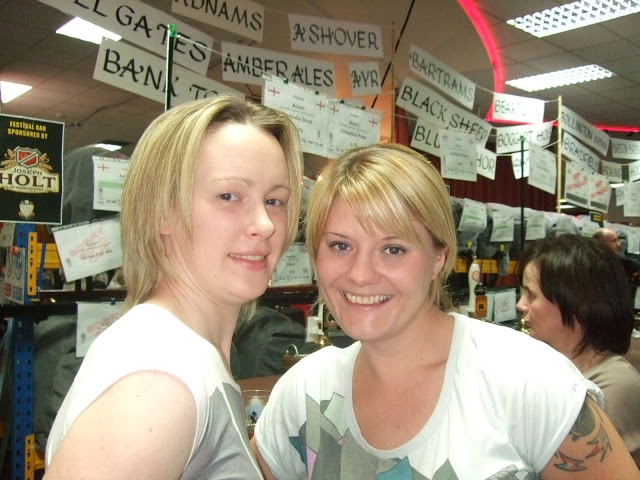
Set against this background, the very recent final National Winter Ales Festival to be held in Manchester, allowed me, as Deputy Organiser, to spend rather a lot of time in our little podium in the middle (it was a bingo caller's box don't you know) examining the crowd.  Not only was that part of my job, but it was instructive to see how the crowd varied and what the mix and dynamics were.  I also was responsible for the door and spent every day watching the crowds as they came in.  On Thursday, when it was free to CAMRA members, there were vast numbers of over fifties, presumably retired and a sprinkling of younger people.  There was also a fair number of tickers in, grabbing the best position and setting out their pre-prepared lists.  Later, after work, the crowd while remaining mainly older, was leavened by a healthy sprinkling of younger people.

Friday repeated the pattern, though by after work time, the balance had swung more in favour of the under thirties, but maintained a healthy mix.  Saturday was more of the same, with a few families in their designated area and a solid mix of ages.

Now why am I saying all this?  Going back to IndyManBeerCon, there, on the Friday at least, it was mainly and I mean almost totally, those under forty.  I doubt if their targeted audience was as broadly based as ours and why should it be?  Their customers were much more seriously  geeky - and I don't mean that as an insult - much more socially aware and probably, far more affluent. They had a different offer which worked for them.  Just as craft keg is a different offer that works for some. 

Returning to that letter in What's Brewing.  The young will eventually become older, the trendy will want to be warm and comfortable, they'll get married and have children.  They and their beer tastes will change and develop.  I'm getting increasingly relaxed about craft keg.  Real Ale isn't going away - there are enough of us around determined on that point - and choice is always good.

Come when you are ready Folks.

As an aside, these old codgers don't half have a laugh.  Plenty of laughter throughout was the order of the day.  I don't recall so much of that at IndyManBeerCon.  Geeky people don't do laughing it seems.

Thursday, 31 January 2013

I'll Still Have a Pub to Go To


I've been a bit busy lately with CAMRA stuff recently and not really been able to keep up with blogs as much as I'd like and consequently have neglected my own. A temporary stare of affairs. One bit though I read yesterday, made me sit up and take notice. I was going to go for an afternoon kip, so knackered am I after National Winter Ales Festival, but Zak Avery's post here got me thinking instead. It is about the decline in beer sales against a background of a rise in the number of brewers and itself follows on from points made here..

 That bubble will bust many say and it no doubt will. At any rate it is hard to see anything other than a decline in the rate of increase.  I kind of believe that far from the smoking ban which saw a load of (mainly) older drinkers decide not to drink in pubs, there is wider societal change that means the number, type and quality of pubs will change. The anti alcohol brigade, through lies and distortions, have managed to scare off many from pub going, the pub companies have driven many pubs into the ground, the quality and business nous of many a landlord is clearly questionable and the days of a pub on every corner, while not entirely gone, are in decline. As working class areas change their populations, many have seen their pubs die as well. Unemployment, high prices, poor facilities, rotten welcomes, generational indifference to the pub as a social outlet and much more have changed the pub from the "must go to" haven it used to be, to an occasional treat, or even an imposition. For many young people the constant need to produce ID has driven the under age out of pubs and social interaction can easily be achieved electronically.  I dare say too these days,  there is much more chance of other more enticing horizontal delights too.

So why go to the pub? Remaining bottom end pubs are no go areas, road house pubs have either gone or become family oriented eateries, estate pubs have closed, slowly, one after the other as drinkers can drink and smoke cheaply at home, town centre pubs can be hell holes at weekends (or magnets for a certain kind of young drinker) and deserted during the week.  Good honest locals are struggling too. My observation too is that many young drinkers that do find their way to the boozer, aren't drinking that much by way of beer, but ready mixes, exotic ciders and gaudily coloured spirits with Red Bull.  A grim picture in some ways, but the young won't stay young forever and they will change. Predicting how might be worthwhile.

 But what of these brewers? Still coming out of the woodwork and despite the occasional failure, still doing reasonably well overall, as pubs become more open to them through being re-opened or re-invented as free houses, ties being loosened and wise entrepreneurs seeing gaps in the market. In addition - and these are very prevalent in Manchester - there is the cafe bar which will likely sell bistro style food, and a mixture of craft and cask beer. Craft beer bars are booming as operators see that in any bad situation, there are still people with money to spend, that want something that bit different. By operators, I mean both those that make beer and those that retail it.  Brewers with tied houses are increasingly turning to food as the answer and for some it will be, but it still leaves a lot of pubs with a need to change their game. The world of beer is changing and if those that sell beer, pubs and brewers, don't find a niche, be that craft, cafe, alehouse, circuit pub, family pub or whatever, they are doomed.  And they better get a move on. The big brewers see that as an attractive and fertile piece of the action too, particularly Molson-Coors.  I also see the market as being more segmented than it ever was.  The old days of the pub being that easy social mix of all types, is in most cases, a thing of the past.

The market is in some places at least, adapting to changed social conditions and those pubs and businesses and, yes, brewers, that are wily enough to see niches and gaps will do well. Pubs have always adapted or died and what is happening isn't really new, though some would argue the scale is different.  Brewers have to change too.  While there may still be scope for more tie loosening and therefore more opportunities for brewers, the need to be different is just as strong here.  It is no longer good enough to churn out a bog standard, bitter and golden ale.  More is needed and increasingly this "more" will be filled by smart brewers catching the mood of the moment, be that craft keg, cloudy beer, Imperial this or that,  or whatever.  I for one, as an aside, am gratified to see how many brewers see the possibilities in good British brewed lager, but that's a separate post coming soon.

Above all, quality is the key. Prices are high and while at one end (the cheap end) consistency is expected, above all, beer has to be of great quality, served in top condition in places where clearly you are valued as a customer.  Many pubs and brewers are still failing that test.


I fear for them, but not for the pub as a whole.  There will be less of them, (and probably less brewers too) but they'll be of better quality.  Good pubs will survive and do well as they always have.  They'll see me out for sure.

There is also an attractive argument that declining large brewer volumes paint a distorted picture of the brewing scene today.

Wednesday, 16 January 2013

That Sinking Feeling


So, Heineken is about to reduce the strength of John Smith's Smooth to 3.6%? Nothing all that surprising really. In fact what is surprising is that it took them so long. As they point out themselves, their rivals are already at (or in some cases below) 3.6%, so there is little risk to sales in doing so. I somehow doubt that many drink it because of its alcoholic strength - quite the reverse in fact - for smooth keg ales of that ilk are hardly aimed at the discerning part of the market, but the convenience and commodity part of it.

There is of course a tendency for beers to drop in strength as pressure is put on the trade over alcohol and we have seen premium beers slowly slip, bit by bit under 5% and nearer to four. Is there a point when standard bitters, like Lees at 4% and Robinson's Unicorn at 4.1% become the new premium bitters? We are some way off that yet, but certainly, they would tend to fall into that old and almost forgotten category of Best Bitter, which the likes of Timothy Taylor's Landlord occupies. Whichever way you look at it, for branded beers - beers that you know by name and reputation - there is now considerable bunching around 3.6% to 4.2%.  Of course, you could make a fairly convincing case for saying it was ever thus, but in the past you would have been offered a stronger alternative.  That isn't so likely now.

Price of course has a part to play. It is no surprise to read that Heineken, while saving £6.6 million in duty, will put the price of the reduced gravity liquid up by 2.5p a pint, which will equate no doubt to even more than that in the pub, though no doubt, places like Wetherspoon will look to improve their discount to alleviate the effect on customers. And make no mistake, without huge discounts, Heineken wouldn't shift nearly so much of it, even if it is a "must have" beer for low end pubs.

Will this trend see a creeping down in the alcoholic strength of standard (cooking) lagers? I'd watch that one very carefully. With Carling and Fosters at 4% and Carlsberg at 3.8%. I wouldn't be at all surprised.  It may be cynical, but in big volume beers, which sell on brand image and familiarity, rather than taste, there is money to be made in reducing alcoholic strength.

Brewers of course see this as a victimless crime, but there are losers.  The customer for one and the Treasury for another.  And when the Treasury lose money, they find a way of getting it back.

The cask version - if you are unlucky enough to come across it - will stay at 3.8%

Wednesday, 9 January 2013

Old Friends - Strong Recommendations


I'm a simple soul me. I don't go out to find obscure beers, but beers that I can sup with pleasure and depend on. That is, incidentally, how most people drink and why, despite the bumping of gums by beer geeks about it, good old fashioned brown bitters, golden ales and mainstream lagers are so popular. Difficult to drink beers are and always will be, a minority obsession.

But I digress. I was pleased therefore to walk into the Regal Moon last night and be offered a choice of two old favourites, so I compromised and had both - not together - but one after the other of course. Ossett Silver King is a very clear, pale beer, with a crisp citric bitterness that makes it very easy to drink. A fairly regular option in the Regal Moon, it was my first non Lees beer of 2013, so a milestone of a sort. Next up was Hawkshead Lakeland Gold. Another pale one, but not as pale as Silver King, but with the emphasis more firmly on bitterness. Very pleasing with my ham, eggs and chips - told you I'm a simple soul.

And so to the Baum and the main event of the evening, my CAMRA Branch meeting. The Baum, as befitting its status as Greater Manchester Pub of the Year had a great selection on. My eye was drawn as if by a magnet to a name that always inspires confidence - Mallinsons. This time Aramis, using the French hop of that name. Pale, bitter, zesty with a full tasting bitter finish, it was a lovely beer. Of course,the thirty odd CAMRA members soon saw this off. Good for business we are.  The replacement was another Mallinsons beer, this time Tethys, using Sumer hops. Not a hop I've heard of and not as strikingly good as the Aramis, but pretty decent, though if given a choice, I'd have supped them in reverse order.  I finished on another very bitter beer in top condition. Marble Beers need no introduction and Marble Best did not disappoint, with a great malt backbone, backed up by layers of bitter, resiny hops. A splendid beer.

So my point is the familiar need not be boring. Beers from Ossett, Hawkshead, Mallinsons and Marble are beers not only to drink with confidence, but with clear enjoyment.

We had 34 members at our meeting last night. Good for business indeed.

Friday, 4 January 2013

My January


I've enjoyed reading various posts about dry Januarys, but while I'll be cutting down a little due to mince pie excess, January means one thing to me above all - The National Winter Ales Festival. Next week I'll go over my huge amount of paperwork and ensure all my stuff is up to date for my main role, that of Health and Safety Officer.  I say main role, but that is moot, as my "other" responsibility is as Deputy Organiser, which of course gives me a sharp overview of the huge amount of work put in by a lot of very dedicated people.

It is quite amazing to look at the beer list and realise that there is a remarkably long list of beers that choose themselves, either because they are competition entries (we host the Champion Winter Beer of Britain, plus Regional Heats for next year.)  There are sponsor's beers too - yes we have them otherwise the cost of entry would be prohibitive - and we have a feature this year involving Project Venus.  When you take that lot out, the "free" list is a lot shorter than you'd imagine.  The Beer Orderer has a remarkably difficult juggling job to do.  It is a huge credit to him that despite the difficulties, we will have a fantastic choice for customers.

Meantime others have been working on foreign beer lists, cider lists, pricing, bar kit, cooling plans, electrical plans, liaison with Police, staffing,  beer judging, security, logistics and a thousand other mind boggling things. In addition to door and foyer arrangements (another little sideline of mine) and Health and Safety, I'll have to get my head round a beer tasting I'll be giving to corporate customers.  I haven't done one for a couple of years and while fun, they are quite a responsibility as they need a fair bit of planning.

Sometimes we wonder why we do it, but I know it will all come together and when the punters start to flood in, it will all be worthwhile.

Do come and join us and see how it has all worked out. You really will be most welcome.

National Winter Ales Festival, 23rd-26th January 2013, Sheridan Suite, Manchester, M40 8RR.  Over 300 Real Ales, Ciders and Foreign Beers from around the world.

Wednesday, 2 January 2013

Silly Me


I don't like to start the New Year on a negative note, but it is the blogger's lot to speak as you find.
I was in a local Lees Managed House over the festive period and keen to try Lees Christmas Seasonal, Plum Pudding, I ordered a pint.  The young barmaid waited while the manager was using the handpump.  There was a pint of Plum Pudding sitting at the side.  The manager said to her colleague "You can have this."  I immediately said that I would prefer not to have the last pint poured out of a cask - I assumed she was changing the barrel - and said so.  The manager assured me it was not the last pint, but that there had been a problem with the connection and this one was fine. 

Now as I am fairly well known in a lot of Lees houses (though not to the manager in this case), I dislike such situations. Someone is bound to say "I see the local CAMRA Bod is in complaining about the beer."  So I reluctantly accepted the pint, which wasn't great, but not bad.  My second pint was terrific though; sparkling, clean and delicious. Night and day.  I knew then I had been "had". Serves me right. I had my doubts and should have stood my ground, but for mixed, or maybe mixed up, reasons I didn't. But I don't like being served beer that on the evidence available to me, was known by the manager to be less than optimal. Cask beer should never be served where there is a doubt as to quality.

It won't be that way next time when I have my doubts.  My first New Year's Resolution!

Happy New Year to all my readers.  Have a great 2013.

Friday, 28 December 2012

What William Said


I mentioned a little while ago, that we (CAMRA Rochdale, Oldham and Bury) were visiting JW Lees Brewery as their guests, not to tour the brewery, but to hold a business meeting there. Naturally on the night, we asked William Lees Jones, the Managing Director, to say a few words.  It went roughly like this:

William first of all re-iterated his own view that CAMRA was a positive force for good in the industry and that he always told fellow brewers that a good relationship with CAMRA is vital.  In a wide ranging speech, highlights were that careful spending on the brewery itself, with programme of re-building over the years, had meant that the brewery was in tip top condition. As well as the ranges of cask beer being produced, the brewery has a completely up to date and flexible lager plant producing Golden Original and Carlsberg.  He mentioned that Golden Original sales were very impressive and that in a recent blind tasting (in which I was involved),  it had come top against leading standard lagers. William mentioned that additionally Lees are sole importers of Draught Bohemia Regent Lager which is available throughout the estate and free trade.  Lees even “export” Carlsberg Lager back to Carlsberg itself.  The estate will remain around 170 or so, give or take. Small pubs still give concern and where a living cannot be made for either tenant or the brewery, pubs will be sold. Trading conditions remain difficult, but the brewery has been able to increase profits slightly by buying good quality pubs from the likes of Punch and bringing out their potential.  Free trade has been badly affected by micro brewers being able to undercut Lees due to Progressive Beer Duty.  William felt that micros cater for a segment of the market that mainstream brewers will never cover as well and that it provided choice for consumers, though PBD does give them a considerable competitive advantage.

For the future, there will also be more investment in brewery plant and pub décor as there is no intention to quit brewing or to become a Pub Company. 
  
  • Three standard cask beers plus a seasonal was the aim for all managed houses
  • Tenants encouraged to stock more from range
  • More promotion of seasonal ales
  • All seasonals 2013 will be single hop beers
  • Possible collaboration on experimental beers with a local micro
  • No room in Brewhouse for a pilot plant hence considering above
  • Pubs will continue to be bought and sold with the estate remaining around 170
  • £1 million is being spent on new German kegging plant (being installed currently)
  •  Vintage Harvest Ale selling massively in the US in various forms
  • Manchester Star a big success in Sainsbury's Great British Beer Hunt
 This was a very lively, informative and open meeting with William being questioned closely on the company's products, policies and plans.  While Lees do rely on food, as William put it "I'm not here today to discuss the quality of our chips", The focus was on beer and it was good to see a local brewery still totally committed to brewing.  You certainly didn't get the feeling that Lees are stuck in the past, rather, keenly aware that times are challenging and changing.

On the social side, we had a preview version of Plum Pudding, the Christmas beer and all the beers were, as you'd expect, on top form, particularly the Brewer's Dark, which I'd been looking forward to.  I was rather impressed too with John Willies, a beer you don't come across all that often.  I even managed to resist (just) a pint of Bohemia Regent.

And the home made meat and potato pie (from the Old Boar's Head I believe) with red cabbage was lovely too!

This article first appeared in the Winter Edition of our own More Beer Magazine.  The photo is William Lees-Jones addressing members, with Head Brewer Michael Lees-Jones looking on.

Saturday, 22 December 2012

Golden Pint Awards


Well Folks, put down that glass of Birra Obscura and pin back your lugholes.  This is the feet on the ground, 'Golden Pint Awards. No strange beers that you have to choke down while holding your nose, or collaborations between brewers, who have you pay for them meeting up with their chums and no beers aged in feta cheese barrels or any other such bollocks and no beers to share. Just good old beer that you buy yourself and drink yourself.   The key to my selections is always drinkability. Boring eh, but you are stuck with it.

Best UK Draught Beer   

Tricky one this.  There is always the delight of  Hawkshead Windermere Pale, or NZPA, which never fail to please, or Brodies All Brett IPA, or their Sunshine even.  What about great beers from Allgates or Green Mill Cat's Whiskers? (my best mild of 2012). Many worthy possibilities, but my awards goes to Ossett Citra.  A beautiful example of a single hopped beer, which I just kept repeat ordering until the last bus.


Best UK Bottled or Canned Beer

 Even trickier since I rarely drink any. I have enjoyed the beers from my local Wilson Potter Brewery, which mimic cask so well and anything from Stringers in a bottle is very worthwhile. Thornbridge beers in bottle have a wonderful freshness that I really like, so it is Thornbridge Chiron. Balanced, hoppy and with great drinakability.

Best Overseas Draught Beer

Bohemia Regent is a strong contender - a lovely beer. Schneider Mein Hopfenweisse also impressed me greatly, so is a contender, but is has to be Rodenbach. In a great little boozer in snowy Blankenberg, it was oh so drinkable, with its touch of sourness and oh so memorable. Since I write almost nothing down these days, it has to stick in the memory and does. 


 Best Overseas Bottled or Canned Beer 

Schneider Meine Hopfenweisse.  Dangerously drinkable.

Best Overall Beer

No overall winner. I just couldn't pick one. Different beers are best in certain circumstances. 

Best Pumpclip or Label

Lees Bitter. It means home to me beer wise. 


Best UK Brewery

My "go to" breweries are Hawkshead and Thornbridge, but even though I haven't mentioned individual beers, it has to be Summer Wine.  If they have a house style, it is cleanness.  Their beers, no matter whether on cask or keg, complex or not, are wonderfully clean.  They even do styles I don't like that much well and they are one of the few breweries whose keg beer has something to recommend it. Now that I think about it, their Rouge Hop could have been beer of the year and I don't like red ales.

Best Overseas Brewery

De Cam.  Spectacularly good beers as I wrote in my blog.


Pub/Bar of the Year

I drink in a lot of really good places, so again it is down to good times with good people. Honourable mentions to the Holborn Whippet, Port St Beer House, that little pub in Blankenberg, the Ship in near home, my local the Tandle Hill Tavern and many more. There isn't an overall winner, but I'd rather be drinking "twiggy" beer with friends than great beer with strangers.

Beer Festival of the Year


 National Winter Ales of course.  I do help organise it after all.   And GBBF was rather good back at Olympia.


Supermarket of the Year

No views

Independent Retailer of the Year

No views

Online Retailer of the Year

No views

Best Beer Book or Magazine

Beer Magazine

Best Beer Blog or Website 
 
Honourable mentions to Boak and Bailey - relentless, but very insightful at times. Pete Brown for authority, Curmudgeon for topicality, Paul Bailey for pubs and Beer Nut for tasting notes. Overall winner though is Pump Clip Parade  for its campaigning role against sexism and bad taste in British Brewing.

Best Beer Twitterer

Kristy McCready.  She is brilliant. A great loss to the industry, but still interested in it you can tell.

Best Online Brewery Presence

Hardknott. Funny and likeable and they are lovely people.
 
Food and Beer Pairing of the Year

I'll pass on this one, but everything at the European Beer Bloggers Conference worked well.

In 2013 I’d most like to...

Still be here. 


Open category - Most Improved Cask Ale Brewery

Allgates of Wigan.  These boys are hitting their stride 

Biggest Tossers in British Brewing?

Guess? Correct!

Sorry about the formatting. I had terrible trouble with it.

Tuesday, 18 December 2012

If it's Good Enough for the Consumer?


Most - the huge 90% plus majority of beer is sold by big brewers.  That's a fact.  When people slag off big brewers, they are, by and large dissing almost everyone that drinks beer.  It isn't usually looked at that way, but that's really how it is. I'd say if that isn't snobbery, what is?  But of course, I'm a beer snob too. Not as much as some, but a snob nonetheless.

There was an interesting piece in E-Malt the other day about craft beer, written (or rather his words were reported) by Graham Mackay, who it turns out, is none other than the Chairman of SAB Miller Brewing, who are pretty big in the mass produced big brands game.  Noting that In the US, craft beer saw a 13% increase in volume in 2011, while overall beer sales were down by about 1.3% by volume during that same period, he said "the elimination of harsh and intense flavors has been the central sweet spot of the beer industry for decades, if not generations. If we go back 30 or 40 years and look at the formulations for the big brands that still exist, their bitterness levels in the U.S. are 7 to 9 [measured in International Bitterness Units]. Those brands, 30 or 40 year ago, were up at the 17, 18, 19 kind of level. European lagers are somewhere between 20 and 25."  Today, the consumer has gone back to saying, "Let's get a bit of interest, let's have a bit of difference." So, there's been the growth of craft beer."

Now the fact that flavour and character has been eliminated from big brands is hardly a revalation, nor is the fact that a lot of consumers are turning to craft brewing as a way of getting that flavour, not only back, but enhanced.  He went on to tell us that SAB Miller is entering the craft market, but admitted that it is "difficult for big companies to incubate small brands. That, at its heart, is the dilemma. To start a small brand in a credible, consistent, sticking-to-it kind of way is hard for big companies. That's what small entrepreneurs do best.”  When they do enter the market, craft brewers feel "we're stealing their authenticity. What we say is, 'Let the consumer decide.' If we're authentic enough for the consumer, that's authentic enough for anyone.

Mackay sees difficult times ahead for craft beer.  "I don't think the craft movement in its current guise will continue to grow indefinitely. I don't think it can. It's not economic. Too many people won't make any money. Too many of them will go out of business. And I think it will become less fashionable. These things are fashion to some extent,"

So how much of that do you agree with? Will the craft bubble burst? Will the big players whittle it away, or will they just whittle away at at it? Is it just fashion?  Do these observations which are largely aimed at a US audience have much traction here? I'm not sure.  I think there are two markets running on parallel lines.  I doubt if craft beer will have a crash here, though they ought to watch the warning signs on overpricing, which is endemic and complacency about the big guys, which is institutional, as well as the inevitable dog eats dog situation that will develop if the market continues to grow and recession continues to provide an unhealthy backdrop to spending on beer.

At the end of the day, Mr Mackay is right about one thing. If it is authentic enough for the consumer, that's authentic enough for anyone.  That's not just a warning, but a prophecy.

Read the full article here in E-Malt. Or above really!

Saturday, 15 December 2012

Propping Up the Bar


For a change on Thursday I phoned my mate Colin and suggested that most old fashioned of things, a tea time pint. We chose the Ship Inn because Colin lives near it, we know the tea time crowd and the landlord and it is directly on my bus route  In short, we know it as a convivial pub that is handy and where we know lots of people.

Now the tea time pint used to be beloved of the after work crew, though I'm guessing that isn't the case so often now, except of course in London, where almost everyone comes to work by public transport.  (As a particularly important aside, if more people went to work elsewhere by bus or train, it would surely be of benefit to pubs?) I used to like it myself, but for many reasons, I gave it up years ago, long before I retired from the daily grind.  Mostly it was because there was always that temptation to have one more than you should, and I felt it was a habit I ought to kick, despite enjoying the conviviality and the beery winding down.

The Ship still has a regular tea time mob, all living locally and all as far as I can tell either retired or dropping in after parking up at home. Few people at any pub want to chance even two pints and drive home afterwards, but where you have a relatively local living customer base, it is still the same cheery atmosphere I used to enjoy.  So I stood at the bar and joined in with it all - swapping tales of this and that - a bit of banter and of course a touch of gossip, as there is a fair crossover between the Ship and my own local. They are pretty near neighbours and it is a great little pub which I like a lot.

It is a pity that there isn't more of this these days, as it lifted my spirits and of course, unencumbered by work the next day and the strain taken by the 17 bus, I had half a dozen pints of Lees Bitter.  Maybe I'll do it more often.

Good for business too for sure.

I normally drink Bohemia Regent in the Ship, but the Lees Bitter was on good form. Unchallenging maybe, but I wasn't there to be challenged by the beer.

Wednesday, 12 December 2012

Book Review - Britain's Lost Breweries and Beers


Over the last few decades and longer, Britain has lost many of its famous breweries and beers and this book documents a few of them, not so much as history, but anecdote. Names like Boddington and Tetley seem too recent to appear alongside Tamplins, Simpkiss and Bullards and it is a  personal shock to see just how many of the breweries were around when I started drinking beer and how many seem tantalisingly close even now so many years later.(I have drunk original beer from 19 of the 30 beers listed.)

The author, Chris Arnot has obtained some stunning photographs to accompany his prose and the eye is touchingly drawn to the faces looking out from drays, cooperages and pubs, for this is as much about people as breweries and beers and Chris has taken the time to seek out ex-employees to tell the story from their point of view. For many, these days are among the best of times and even when they no longer drink beer, they look fondly on the breweries and bosses and even the (benevolent) paternalism that many of these companies showed. Many of the owners were true characters, who knew every employee by name and treated them to birthday tenners, bottles of champagne, doffed hats and sometimes, downright eccentricity, as illustrated by John Young, who fought to the end against the closure of his beloved Wandsworth Brewery, often wearing boxing gloves to repel boarders and who ironically died just days before the brewery closed. Poignantly and fittingly, beer from the last Wandsworth brew was served at his funeral.

Beer too is featured too, with former brewers describing the output and drinkers fondly remembering the brews.  Sad tales abound, like Boddingtons, whose iconic beer was slowly bastardised and tinkered with until the brewery was finally closed by InBev in 2004, or Shipstones, whose marvellously bitter beer was closed in pursuit of Greenall's vainglorious tour of destruction.  Greenalls are rightly identified as villains of the piece, along with the asset stripper, Michael Cannon, who saw off Morrell's of Oxford, Devenish and Eldridge Pope.

For all its charm and nostalgia, this is not a book without faults. Tales of family and corporate greed, ineptitude, fecklessness and recklessness that pointlessly destroyed companies with fine brewing heritages stretching back over 200 years, are underplayed or go unremarked for reminiscences from the tap or sample room.  Sometimes we are told what caused breweries to close, but not always, which leaves the reader wanting to know the details behind the anecdote. We have a photo of Jonathan Simpkiss who sold out his brewery and its sixteen Black Country pubs to Greenalls, with the last brew famously being poured down the drain, thus cruelly denying regular drinkers a last farewell . A haunting tale of corporate unfeeling thoughtlessness indeed, but frustratingly, not the "why" behind it. I'd have liked just a little more consistency about why these wonderful companies disappeared.

Nonetheless these are small negatives in what is an engaging and personal book which reminds readers of a time where beer really was local, where breweries and the people employed in them were part of the warp and weft of local communities and a source of pride to them.

 This book is sheer nostalgia and none the worse for that. It is a must for those like me, that remember these companies and for those that don't, it is a touching reminder that our brewing industry has a very local and personal heritage. A second volume beckons surely, as sadly, there are plenty more closed breweries to go at.

Britain's Lost Breweries and Beers is  published by Aurum, who kindly supplied this review copy.

Tuesday, 11 December 2012

Passion and Brewing


Are you passionate about beer? Does it consume your every waking moment,or is it just a drink that you enjoy with enthusiasm, while keeping perspective clearly in view and your feet firmly on the ground? Now most people reading this blog are likely to be keen on beer. Very keen on beer. Too keen on beer even, but degree will vary. Within the beer fraternity you tend to have a broad church and a few zealots. This zealotry can exhibit itself in many ways; the real ale, fiend, the dedicated Guinness drinker, the ticker, the lager man, the craft keg devotee, etc. etc. Whether these are passions or just preferences or mild obsession is moot, but beer to the devotee, brings out strong feelings.  Not so unusual, as products of all kinds, from cars, to biscuits or whatever, have their specific adherents. It is human nature and what makes (some of) us tick.

That's drinkers though. What about the passionate brewer? I read constantly about the new breed of craft brewer and passion. Thornbridge has the word embedded into its slogan and advertising.  Even Gazza Prescott, erstwhile ticker, brewer and a bit of a sceptic where such things are concerned, speaking on Twitter,  thinks there is something to this. Brewers with passion are better brewers, is both implied and stated. (Not just by him I hasten to add). Now let's consider this. Most micro brewers are unqualified except by experience. This isn't to insult them, but most have been home brewers, beer fanatics, or whatever and learned as they go along. They may have had a Brewlabs, or Dave Porter Brewing course, but they are basically playing it all by ear. Nothing wrong with that. That's the art of brewing, but not the science. It is partly what makes beer so approachable. Anyone can do it really. Some better than others of course, but if you have passion, that's even better.  You see, passion, it is implied, makes better beer than qualifications or science and sets some brewers apart. Well, maybe.

Now of course there is always  a place for passion in what you do or believe in. It drives you forward. It makes you push at the barriers and get up in the morning. It allows you to recover from setbacks and to enthusiastically do what you do. It doesn't replace training, knowledge, skills, technique or qualifications though. It just supplements them in the best of cases, or is used as a mask to hide behind in others. Big brewers don't have passion is the unspoken part of this message. I am not so sure about that.  They may well be restricted by environment and by corporate or other diktats, but many have just as much passion as the small brewer in his pride.  I'll tell you a story. A couple of years ago, one Saturday, I met J W Lees Second Brewer and Brewhouse Manager in the pub. He was looking particularly dusky, so I enquired as to the reason. He'd just come back from his hols. "What time did you get back?" I asked. "Early this morning" he replied. "Ah", says I, "Back to work on Monday then?" "Yes" he said "though I've been in already." "What just now?" I asked, for it was afternoon? "No, about five am. this morning, when we'd got back from the airport. I just wanted to check the fermentation and see if the Brewhouse was OK."  Was that passion or dedication? A large slice of both I'd say.

Small brewers are constantly looking for ways to set themselves apart from their larger rivals. So is passion one way to do it? Does passion  actually make a difference or are you better just knowing your stuff? Possibly, but neither is limited to small artisanal brewers, or innovative ones, or even dedicated ones. Does passion make you a better brewer? Quite likely, but I'd venture only if you are a good brewer in the first place.

 I think passion is a word that needs to be used sparingly and in context. It is far more common though throughout British brewing than some would have you think.

Passion is an intense emotion compelling feeling, enthusiasm, or desire for something.  Both Thornbridge and Gazza are used for illustrative purposes only.

Friday, 7 December 2012

Times Change


Five years ago I was remarking in my blog about the high cost of of a bottled beer in the Marble Arch. I wrote "Also available for purchase by the 33cl bottle was "Decadence" an organic bottle conditioned Imperial Russian Stout of 8.2%. At a whopping £4.50 a bottle."

Doubt if anyone would bat an eyelid now.

Actually maybe they would.  I have a bottle. It is 75cl and 8.7%.  Think it was around £15. Not that I paid for it obviously. I don't think it is organic either.

Monday, 3 December 2012

Muddled Thinking and Downright Misrepresentation


Yesterday's Sunday Times had a substantial piece by Dominic Lawson about minimum pricing of alcohol.  He concluded, correctly, that "A minimum price per unit of alcohol is a form of collective punishment" and pointed out that "a minimum price for alcohol is likely to lead to a significant transfer of revenue from consumers to producers and retailers". But we know that don't we?  That's why people like Greene King and BrewDog support it.  Not out of any kind of altruism, but good old money.  Contrast that with Tim Martin of Wetherspoon who isn't noted for high prices, calling supporters of minimum pricing "Flat Earthers". It is altogether remarkable that otherwise intelligent people support it in the vain hope of stopping something they have read about in the papers or seen on television called "bad behaviour", or in the case of Alcohol Concern, to pursue a prohibitionist agenda (first control the price, then make it difficult to buy it, then ban it.), the real but misguided concerns of doctors - why not address individual problem drinkers? - the equally misguided wishful thinking of CAMRA that somehow this will translate into more pub going, or whatever this rag, tag and bobtail of do gooders want to do to the rest of us.  (My only hope on that one is that CAMRA is following a policy of keeping friends close, but enemies closer still, but somehow, I doubt it.)

What is remarkable is how Dominic Lawson tears apart every argument.  He rubbishes the idea that you need to legislate on price to deal with late night rowdiness. He suggests instead that the Police just lock up the perpetrators for being drunk and disorderly and repeatedly do so.  Seems like a good idea surely?  Lawson reserves particular scorn for Sheffield University for its "wild exaggeration and incompetence" in dealing with alcohol statistics and has a swipe at BrewDog's bizarre take on it all (James again) by saying "Sounds as though he has been celebrating".  Instead he counters with some actual facts such as alcohol consumption has fallen by nearly 20% since 2006 and points out that somewhat inconveniently, this has not resulted in a fall in alcohol related deaths, which would have happened if what Sheffield University purports to be true, actually was true.  He quotes extensively from the Adam Smith Institute who have been studying this subject for 40 years.  The leading experts within this field state "We are in the unusual position of being able to empirically disprove  a prediction about policy which has not yet been introduced."

Now of course Lawson wasn't looking at shifting drinkers into pubs, but he does also hammer the idea that supermarkets are indulging routinely in below cost sales. Such happenings account for less than 1% of alcohol sales and have no real effect on consumption

If, like me you think they are out to get us, it is a real good read.  It does seem that there is some hitting back taking place, so let's see more of it.

I'll drink to that.  Responsibly of course.

I'd like to have linked to the article, but it is hidden firmly behind the Sunday Times's paywall. The Morning Advertiser has a good piece here however.

Sunday, 2 December 2012

JDW and My Home Town


I was in Dumbarton last week to see my mother. One of the first bits of news she gave me was that Wetherspoons are likely to open a pub in Dumbarton. It would be in the old Woolies Store I remember so well from my childhood.  It closed in December 2008 when Woolworths crashed out of business.  The next day when the new local paper came out, it confirmed that planning permission was being recommended to the local council.

I have mixed feelings about this. On the one hand it will bring real ale back to the town together with much needed competition and vastly improved choice.  On the other hand it could damage pub trade in a very depressed town, though fears of that may well be exaggerated.  However, if you read the County Reporter, the usual concerns are being trotted out. It was interesting to read JDW's take on this.  A spokesman said " "Wetherspoon's has almost 900 pubs across the UK including around 55 in Scotland. We're not aware of any of our pubs causing others to lose money or close down. In fact, the opposite is true, we encourage people to come into towns because of our brand, which leads to other businesses opening.

" The pubs in this area are already in competition with each other, we will be just one more pub to compete against, and it is the customer's choice where they go." 

Now there will be some that disagree with the first paragraph, but  surely few can disagree with the second?

Photo is from the County Reporter. The main article is here.